Digitalizing Insurance Premium Collection: A Roadmap from Offline to Omnichannel
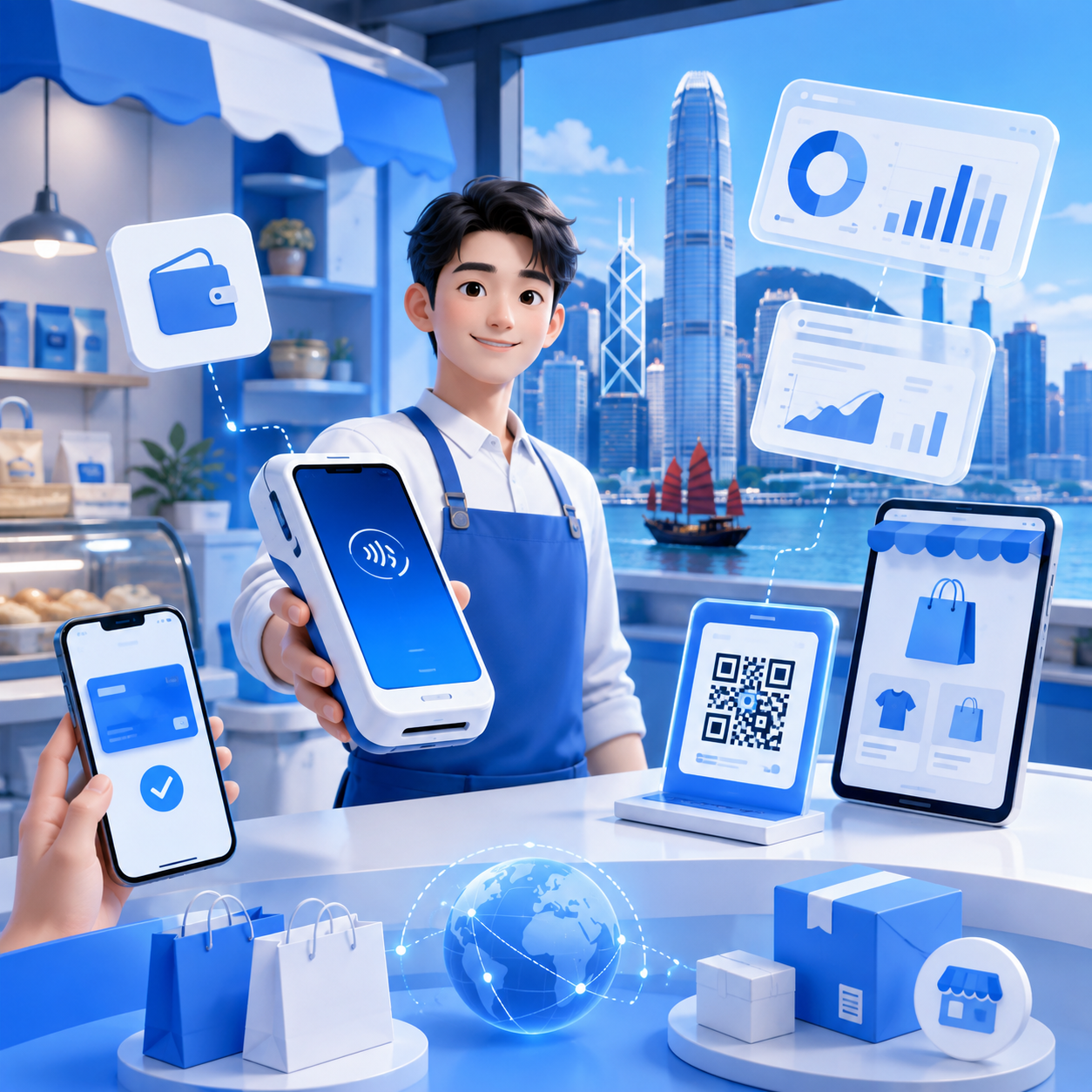
When insurers talk about digitalization, many immediately think of online applications, e-policies, and smart underwriting. However, the premium collection process is often the easiest to achieve 'immediate results' and has the biggest impact on customer experience. Once collection moves from paper, cash, checks, and branch counters to credit cards, FPS, e-wallets, payment links, and QR codes – coupled with automated reconciliation and instant notifications – policy activation speed, renewal success rates, customer service pressure, and financial staffing costs are all simultaneously affected. To achieve a 'one-stop-shop,' the key isn't just offering the most payment methods, but integrating payments, core policy systems, CRM, financial reconciliation, and risk control into a traceable pipeline.
Digitalizing Insurance Premium Collection: A One-Stop Roadmap from Offline to Online
When insurers discuss digitalization, many instantly think of online applications, e-policies, and intelligent underwriting. Yet, the premium collection process is often where 'immediate impact' is most tangible and customer experience is most profoundly shaped. Moving from paper, cash, checks, and branch counters to credit cards, FPS, e-wallets, payment links, and QR codes – alongside automated reconciliation and real-time notifications – directly influences policy activation speed, renewal success rates, customer service workload, and financial personnel costs. The goal isn't merely to pile on payment options, but to seamlessly connect payments, core policy systems, CRM, financial reconciliation, and risk management into a traceable workflow.
Why Premium Collection Deserves Digitalization Priority
Many stakeholders involved; issues arise if any step is slow or incorrect.
Premium collection involves three parties: policyholders, frontline staff (agents or customer service), and back-office (underwriting, finance, compliance). If any step is slow or wrong, common problems arise: policyholders think they've paid but the system hasn't recorded it, agents get exhausted chasing payments, finance relies on manual reconciliation for month-end, and compliance worries about 'third-party payments' and money laundering risks.
Regulatory trends demand more rigorous digitalization and traceability.
More practically, regulatory trends generally require enhanced digital management capabilities, with more stringent identity verification, transaction traceability, and anomaly detection. Digitalizing premium collection addresses both 'customer convenience' and 'compliance control' simultaneously.
In short: when payments flow smoothly, other processes have a chance to speed up.
From Offline to Omnichannel: A Four-Phase Implementation Roadmap
Phased implementation is more practical: first visualization, then deep integration and automation.
Omnichannel isn't a single massive project. A more practical approach is phased implementation, starting with visualizing transaction success rates and accounting entries, then gradually adding deep integration and automation. Below is a common, actionable roadmap; the timeline depends on system complexity and internal resources.
| Phase | Goal | Key Deliverables | Suggested KPIs |
|---|---|---|---|
| 1. Digital Collection Coverage | Offer policyholders more payment options, reducing reliance on offline methods. | Payment links, QR codes, in-store/branch collection devices, electronic receipts | Transaction success rate, digital payment penetration, overdue rate |
| 2. Payment and Policy System Integration | Instant write-back of payment results, shortening activation/renewal confirmation time. | API integration, payment status callbacks, failed payment retry mechanism | Payment-to-accounting time, pending policy confirmation volume |
| 3. Automated Reconciliation & Finance Process Transformation | Reduce manual reconciliation and month-end pressure. | Automated reconciliation rules, discrepancy workflow, reports and permissions | Reconciliation man-hours, discrepancy rate, closing days |
| 4. Consistent Omnichannel Experience & Risk Control Upgrade | Unified rules and views across online and offline, proactive risk alerts. | Unified customer view, black/white lists, anomaly detection, segmented dunning | Renewal rate, chargeback rate, suspicious transaction processing time |
Offer many payment methods, but consolidate the backend into 'one system'.
More channels mean more chaos; the key is unified transaction layer.
A common bottleneck for insurance companies is: every new payment method means an additional gateway, a separate reconciliation process, and another risk assessment, ultimately leading to 'more channels, more operational chaos.'
Use a single payment platform for aggregation: multiple external methods, consistent internal output.
The ideal approach is to use a single payment platform for aggregation, where online and offline transactions all go through the same transaction layer. Externally, it offers various payment methods, while internally, it provides consistent transaction data and reconciliation fields. For the Hong Kong market, companies typically want to support credit cards (multiple schemes), FPS, UnionPay, and major e-wallets, and be able to quickly add new methods when needed without rewriting core processes.
Take Wonder as an example: A one-stop platform closer to 'controlled, traceable, scalable'.
Wonder's positioning as a FinTech platform for merchants in Hong Kong and Asia-Pacific aims to offer a one-stop platform covering up to 34 online and offline payment methods, along with API integration, real-time data analytics, and automated reconciliation. This approach closely aligns with the requirements for 'controlled, traceable, and scalable insurance premium collection'.
In terms of implementation, it's advisable to manage the 'payment layer' as part of the product, rather than a collection of disparate tools. Once the basic architecture is in place, decisions about which POS terminal to use, or whether smart terminals or mobile collection are needed, become much simpler.
Before system integration, create a checklist to avoid repeated work.
When integrating systems, start by clearly outlining key requirements in a checklist to avoid repetitive rework later:
- Payment links, QR codes
- Automated reconciliation
- Transaction status callback: success, failure, cancellation, refund – all must be writable back to the core system
- Payer validation: cross-reference policyholder data with payment data to reduce third-party payment risk
- Multi-channel reports: a single set of reports can be broken down by product line, channel, agent team
- Permissions and approval processes
Compliance and risk control: embed rules into the payment flow
Premium collection is more sensitive: payer identity and transaction purpose must be verifiable and traceable.
The biggest difference between premium collection and general retail collection is the heightened sensitivity of 'payer identity' and 'transaction purpose.' While regulatory approaches vary slightly across markets, the general direction is consistent: payment must be made by the policyholder, verification records must be retained, and traceability must be maintained.
Embed compliance into the experience, instead of relying on manual post-event remediation.
A practical approach is to embed compliance requirements directly into the payment experience, rather than relying on manual spot checks afterward. Common methods include: verifying policyholder information before payment, adding one-time verification during payment, and automatically generating auditable records after payment.
Risk Control Checkpoint List
Here are control points worth including in risk control design:
- Identity Binding: Payment page pre-populates policy number, essential policyholder info to prevent 'pay any amount without verification'.
- Limits and Frequency: Set rules for high-value premiums, multiple transactions in a short period.
- Anomaly Detection: Alerts for patterns like multiple policyholders using the same card, cross-border activity, repeated attempts.
- Audit Trail: Trace transactions, operations, modifications, and refunds back to the person and time.
- Data Protection: Display only necessary information, layered access for sensitive data.
Done well, risk control doesn't necessarily slow down processes; instead, it reduces friction from 'failed payments requiring restart' and 'customer service manually checking each item'.
Automated Reconciliation & Cash Flow: The Two Biggest Concerns for Operations
The value isn't adding a few more cards, but removing hundreds of spreadsheets.
The value of digitalizing insurance premium collection often lies not in 'accepting a few more cards,' but in 'eliminating hundreds of spreadsheets.' When transaction data can automatically match policies, installments, channels, and accounting entries, reconciliation transforms from 'line-by-line verification' to 'managing a few discrepancies.'
Standardized fields + consistent key: Reconciliation shifts from manual to workflow-driven.
A common approach to reconciliation is: the payment platform outputs standardized transaction fields, and the core system returns accounts receivable data using a consistent key. The two can then automatically match. Unmatched exceptions then enter a discrepancy workflow, handled by a designated role.
Settlement speed and fee transparency directly impact when customers receive confirmation notices.
Regarding cash flow, insurance companies typically care about two things: settlement speed and fee transparency. Faster settlement means smoother policy activation and renewal confirmations; greater fee transparency makes product pricing and channel commission calculations easier. Some platforms offer more transparent billing and centralized management, while others support faster settlement cycles (actual arrangements depend on the bank and partnership structure).
These aren't just 'finance department's problems'; they directly affect when customers receive confirmation notices.
Consistent Online and Offline Experience: Agents and Customer Service Must Find It User-Friendly
Omnichannel isn't just apps/websites; it also needs to support 'on-the-spot collection' scenarios.
Another common misconception about omnichannel is focusing solely on apps or websites, neglecting the daily needs of agents and customer service. Policyholders may not always be willing to pay online themselves; sometimes, in branches, hospitals, or during phone calls at home, they might need to complete payment 'on the spot'.
Multiple Entry Points, Single Backend: Reduce Information Gaps
A more mature approach is to offer multiple payment entry points that share a single backend: for example, online payment links are suitable for phone or message follow-ups; QR codes are good for paper notices, branch postings, or event sites; and in-store or mobile POS terminals support face-to-face scenarios. Wonder's integrated products (such as Wonder App, Wonder Dashboard, and Wonder Terminal) are designed with 'easy for frontline, centralized backend' in mind, allowing different roles to see the status of the same transaction on a single platform, reducing information discrepancies.
If the same policyholder pays at a branch today and checks online tomorrow, and both the status and receipt format are consistent, complaint rates will naturally decrease.
Common Resistance and Countermeasures During Implementation
Bottlenecks are usually not technical, but rather process, accountability, and habits.
Driving digitalization in premium collection is rarely limited by technology; instead, it often gets stuck on processes, responsibilities, and ingrained habits. Here are common points of resistance and potential countermeasures:
- Legacy system interface limitations: Start with a payment layer and middleware, allowing core systems to connect with minimal changes.
- Inconsistent departmental KPIs: Include 'payment-to-account time, reconciliation man-hours, renewal rate' as shared cross-departmental metrics.
- Frontline resistance to change: Provide short training and one-page operational guides, and set up a pilot period with feedback channels.
- Customers unwilling to switch: Retain offline options while building trust with clearer notifications and electronic receipts.
- High payment failure rates: Optimize payment pages, add retry and alternative payment suggestions, and track failure reasons.
Many companies, during the pilot phase, choose just one product line or channel for an MVP. The results are often more controllable than an 'all-at-once company-wide rollout.'
Solution Selection: Key Questions to Ask First
It's not about comparing feature lists, but about 'is it making things less troublesome?'
Choosing a platform isn't about comparing feature lists; it's about 'can it make insurance premium collection less troublesome?' When evaluating, consider asking:
Five Key Questions to Ask Before Choosing a Solution
First, can it natively support a sufficient number of mainstream payment methods, and can new methods be quickly added when needed without requiring re-integration each time? Second, does it offer mature APIs and clear reconciliation outputs that can return structured transaction status, refunds, fees, and settlement data? Third, are fees transparent, and are there hidden costs like monthly fees, contract periods, or equipment rental fees? Can transaction costs be predicted? Fourth, are the permissions, approvals, reports, and audit trails sufficient to support internal control requirements? Fifth, is the implementation timeline realistic? Can it be rapidly launched in 1-2 scenarios first, then gradually expanded to omnichannel?
When these questions have clear answers, digitalizing collection is no longer just 'changing a payment button' but becomes a continuously expandable operational foundation. The next step is usually to select a high-frequency scenario (renewal payments or first premium for new policies), ensure payments, write-backs, notifications, and reconciliation run smoothly, then replicate the successful model to other products and channels.

You may also like