Convenience Store License Guide | A Comprehensive Look at Application Procedures, Costs, and Practical Considerations for Opening a Convenience Store
With the rise of nostalgia and the community economy, many people are dreaming of opening their own business. Compared to opening a large restaurant, running a small convenience store or boutique grocery store has a lower barrier to entry and a more flexible business model. From calculating costs and choosing a location to handling the complex convenience store license application, every step of opening a convenience store is full of knowledge. This article will provide you with a detailed guide to opening a business, breaking down the various details of opening a convenience store, and helping you avoid entrepreneurial pitfalls.

With the rise of nostalgia and the community economy, many people are dreaming of opening their own business. Compared to opening a large restaurant, running a small convenience store or boutique grocery store has a lower barrier to entry and a more flexible business model. From calculating costs and choosing a location to handling the complex convenience store license application, every step of opening a convenience store is full of knowledge. This article will provide you with a detailed guide to opening a business, breaking down the various details of opening a convenience store, and helping you avoid entrepreneurial pitfalls.
Why are more and more people choosing to open convenience stores?
In recent years, many new types of convenience stores have emerged in Hong Kong, combining the features of boutique supermarkets, Japanese/Korean snacks, or local cultural and creative products. Compared to the catering industry, convenience stores have lower requirements for kitchen equipment and exhaust systems, and staffing needs are relatively simpler. In addition, convenience stores can penetrate into local communities and build close ties with residents. This 'human touch' is difficult for large chain convenience stores to replicate.
The first thing to consider before opening a convenience store: Positioning and Location
- Residential areas: Rent is relatively low, customer base is stable, suitable for selling drinks, groceries, and daily necessities, aiming for small profits but quick turnover.
- Commercial office areas: Rent is expensive, but purchasing power is high, suitable for selling bento boxes, gourmet coffee, healthy snacks, or imported beverages.
- Schools: A large student customer base, suitable for selling stationery, cheap snacks, and sodas, but attention should be paid to peak hours during school start and end times.
How much does it cost to open a convenience store? Expenses most easily underestimated by beginners
Rent, deposit, and basic renovation expenses
In Hong Kong, rent accounts for a large portion of operating costs. A typical ground floor shop lease requires 'two deposits and one advance' (two months' deposit plus one month's rent in advance), plus real estate agent commissions and utility deposits, making the start-up capital considerable. Although convenience stores do not require luxurious renovations, essential facilities such as shelves, refrigerators, air conditioning, and illuminated signs are indispensable. Coupled with the installation costs of electrical equipment, renovation costs can be higher than expected.
Initial stock purchase and daily operating costs
To make the store appear well-stocked, the initial purchase quantity cannot be too small. Capital needs to be allocated for purchasing various types of goods, and inventory turnover should be considered. In addition, refrigerators operating 24/7 are essential for convenience stores, and electricity bills will be a fixed monthly expense.
Hidden costs and cash flow pressure often overlooked
Besides visible expenses, there are many hidden costs. For example, spoilage of expired goods (especially bread or dairy products), the risk of theft, and the turnover between credit purchases and cash collection. If cash flow is not managed properly, it is easy to fall into the predicament of having goods to sell but no money for rent.
Do I need a license to open a convenience store? Basic concepts of convenience store licenses
There is no single 'convenience store license' in Hong Kong. What licenses are required depends entirely on what goods the convenience store sells.
- Business Registration Certificate (BR): All businesses operating in Hong Kong must apply for this.
- Restricted Food Permit: If you wish to sell milk, frozen desserts (such as ice cream, yogurt), pre-cut fruits, or herbal tea, you must apply for a relevant permit from the Food and Environmental Hygiene Department (FEHD).
- Light Refreshment Restaurant License: If you plan to cook or heat food on-site for immediate consumption (e.g., fish balls, siu mai), you must apply for a restaurant license.
Overview of the convenience store license application process
Which department should I apply to for a convenience store license?
Mainly apply to the Food and Environmental Hygiene Department (FEHD). You can submit the application form online or in person.
Documents required before applying for a convenience store license
The application requires a detailed floor plan of the shop, clearly indicating the location of shelves, refrigerators, and equipment. In addition, copies of the business registration certificate, applicant's identity document, and relevant building plans must be submitted.
Approval time, process milestones, and common holdups
The approval time for a convenience store license generally takes several weeks to several months. Common holdups include ventilation systems and fire safety standards. If the shop location does not comply with fire regulations, or if the temperature of the ice cream freezer does not meet standards, it will delay the licensing process. Therefore, before signing a lease, you should consult a professional to determine if the premises are suitable for applying for the relevant licenses.
What can a convenience store sell? Common business scope and restrictions
- Packaged food and beverages: Generally, sealed packaged food and beverages do not require a separate license, only business registration; however, individual food categories are still regulated by specific laws.
- Alcohol: If only selling alcoholic beverages for consumption off-premises, generally no liquor license is required, but relevant laws must be complied with, strictly prohibiting the sale of alcohol to minors, and ensuring product labels comply with import and food labeling regulations.
- Medicines: Without registration, convenience stores cannot sell products containing medicinal ingredients (such as painkillers, cold medicine), otherwise it is illegal.
- Snacks: Requires a Light Refreshment Restaurant License.
Potential management problems in the actual operation of a convenience store
Supporting cash, Octopus, and electronic payments
If only cash is accepted, making change is extremely time-consuming and prone to errors. Nowadays, customers are accustomed to using Octopus or mobile payments. If these methods are not supported, a large number of customers can be lost.
Daily reconciliation and messy record-keeping problems
Traditional convenience stores rely on manual accounting, spending a lot of time settling income and expenses after closing each day. With a complex variety of goods, manual records are easily overlooked, making it difficult for owners to grasp actual profits and losses and inventory levels.
Operation and staffing pressure during peak hours
During lunch or after-school hours, foot traffic can surge instantly. If payment speed is too slow, customers will turn away if they see a long queue. Using a smart payment platform to improve cashier efficiency is key to increasing turnover.
Top 3 common risks and operational misjudgments for new convenience store owners
Misjudgment 1: Underestimating the competitiveness of large chain stores
Many beginners believe that as long as they choose a residential area, they can survive, but they overlook the huge bargaining power and 24-hour brand effect of 7-Eleven, Circle K, or supermarkets. Do not compete head-on with chain stores on price or product variety. Instead, introduce exclusive handmade snacks, local specialties, or provide 'human touch' services that chain stores lack (such as parcel collection, reserving newspapers for regular customers, etc.).
Misjudgment 2: Overstocking leading to 'cash flow drying up'
Wholesaling large quantities of perishable or slow-moving goods to save on unit costs often results in capital being tied up in inventory, unable to flow. In the early stages, start small, observe the real needs of the local community, and then gradually adjust the inventory quantity to ensure stable cash flow.
Misjudgment 3: Overly singular payment methods
In Hong Kong in 2026, if a convenience store still insists on 'cash only' or 'Octopus only,' it will lose a large number of young and high-spending customers.
Many beginners mistakenly believe that applying for multiple electronic payments is troublesome. In fact, using an all-in-one smart payment system like Wonder Terminal can handle various payments such as credit cards, FPS, and QR codes at once, reducing change errors and improving operational efficiency.
How Wonder Terminal assists with daily convenience store payments and management
Facing the operational challenges mentioned above, introducing intelligent payment tools is an essential strategy for modern convenience stores. Wonder Terminal from Wonder can effectively solve the difficulties of convenience stores:
Integrate multiple payment methods to reduce payment obstacles
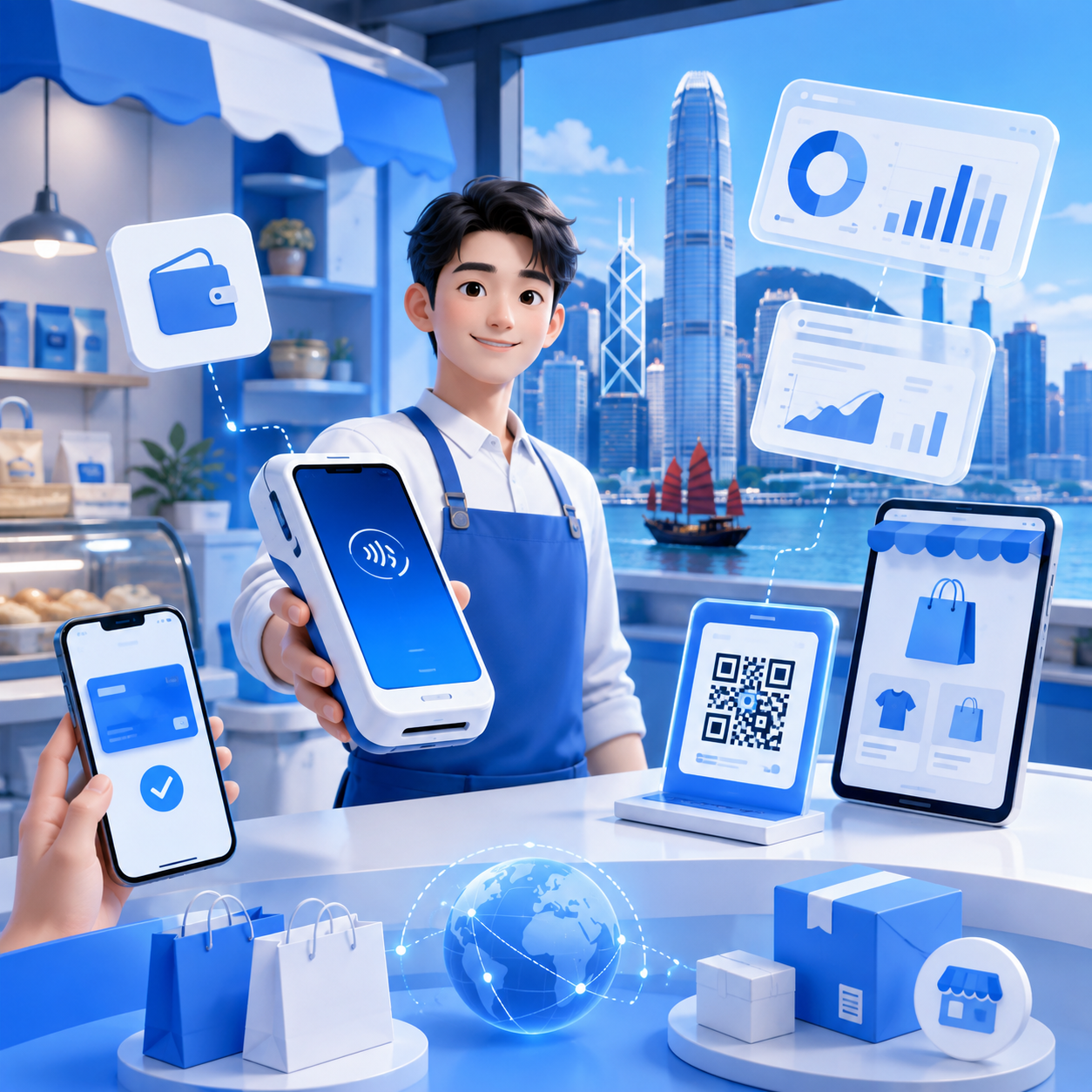
Wonder Terminal supports up to cards, mobile wallets, QR payments and more on a single device, including credit cards, Octopus, Alipay, and WeChat Pay. Staff do not need to operate multiple card machines, and customers do not need to spend time making change, greatly improving checkout speed during peak hours.
Instantly view transaction records for clearer income and expenses
Through the cloud backend, owners can view real-time transaction data anytime, anywhere. The system automatically integrates all electronic payment and cash transaction records, eliminating the hassle of manual reconciliation every night and automatically consolidating accounts.
Simplified operation process suitable for small shops
Wonder Terminal's interface design is intuitive, allowing even part-time or older employees to quickly get started. The simple operation process not only reduces training costs but also minimizes human operational errors, allowing owners to focus on shop management and product selection strategies.
Conclusion: Before opening a convenience store, consider licenses, costs, and operations all at once
The key to success for convenience stores lies in balancing location strategy, cost control, and compliant applications. In the wave of digital entrepreneurship in 2026, thorough preliminary preparation and effective use of Wonder Terminal's smart tools to improve payment efficiency are shortcuts for small shops to transform and upgrade.
You may also like