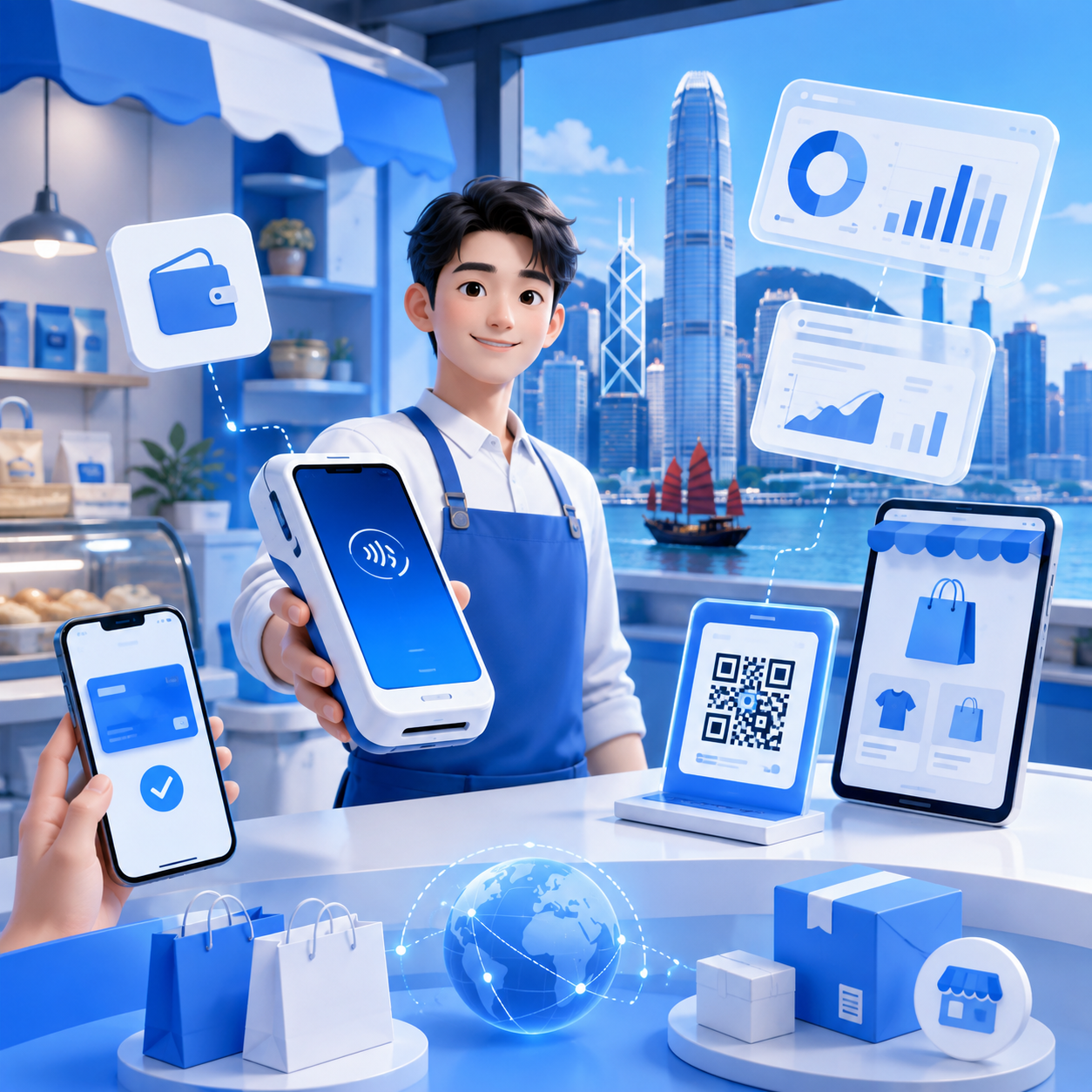
Pop-up & Market Mobile Payment Solutions (Hong Kong) | Instant Setup, Multiple Payment Options
Operating at markets and pop-ups is very different from a regular retail store. Limited space, short prep time, and fluctuating foot traffic mean that the biggest concern isn't slow sales, but payment delays that lead to long queues and ultimately impact conversion rates.
Operating at markets and pop-ups is very different from a regular retail store. Limited space, short prep time, and fluctuating foot traffic mean that the biggest concern isn't slow sales, but payment delays that lead to long queues and ultimately impact conversion rates.
In Hong Kong, customers have diverse payment habits. Some use contactless, others scan QR codes, some prefer Octopus, and many opt for PayMe or FPS. For vendors, a mobile payment solution isn't just about "can I get paid?" but also about instant setup, fast transactions, easy backend reconciliation, and transparent fees.
Why Market Vendors Fear Slow Payments Most
Efficiency is key in a market setting. Customers often browse on the go, making buying decisions in seconds. If a stall only accepts cash or just one or two e-payment methods, customers might not be willing to wait, especially during peak hours, hot weather, or long queues.
Operational Risks from Difficult Reconciliation
Another common issue is "difficult reconciliation after payment." Many vendors display multiple QR codes, use a separate contactless POS machine, and handle cash. The more payment methods, the more complex reconciliation becomes after closing. For pop-up stores operating for just a few days, this chaos affects operational efficiency more than transaction fees.
Therefore, an ideal mobile payment solution revolves around three core principles: quick activation, comprehensive payment options, and centralized transaction management.
Common Payment Methods in Hong Kong Today
Mobile payment methods common in Hong Kong markets generally fall into four categories. The first is pure QR code payment, which is low-cost and simple to operate. The second is SoftPOS, where a phone acts as a payment terminal, accepting contactless credit card or mobile wallet payments. The third is portable POS terminals, suitable for high transaction volumes, receipt printing, or multiple operators. The fourth is a hybrid model, using one platform to handle QR codes, contactless payments, payment links, and backend reconciliation.
Comparison of Four Mobile Payment Solutions
| Solution Type | Applicable Scenarios | Advantages | Considerations |
|---|---|---|---|
| Pure QR code payment | Small markets, low-value items, testing new stalls | Fast activation, low equipment requirements | Requires managing multiple payment codes, reconciliation can be time-consuming |
| Mobile SoftPOS | Pop-up stores, mobile stalls, space-limited stalls | No extra hardware needed, accepts contactless credit cards or mobile wallets directly | Relies on phone model and network conditions |
| Portable Terminal | Peak foot traffic, need for receipts, multiple operators | Stable operation, convenient contactless and QR code scanning | Requires hardware and charging |
| All-in-one Platform | Merchants needing to manage multiple payment types and reports simultaneously | Centralized payment methods, clear data, automated reconciliation saves time | Need to confirm supported methods, rates, and settlement arrangements before activation |
The Importance of Payment Method Coverage
If your customers are mainly local, Octopus, PayMe, FPS, AlipayHK, and WeChat Pay HK are crucial. If your clientele includes tourists or high-spending customers, then credit cards, Apple Pay, Google Pay, UnionPay, and other contactless payments are even more important. Relying on a single payment method often limits sales opportunities.
Don't Just Look at Transaction Fees When Choosing a Solution
Many merchants initially focus only on fees, thinking lower is always better. However, markets and pop-ups should consider overall operational costs. If a low-fee solution leads to slow payments, chaotic reconciliation, or missed transactions, the ultimate loss could far exceed the transaction fees.
Key Factors for Evaluating Payment Solutions
What truly needs comparing are transaction speed, activation time, supported payment methods, settlement arrangements, clarity of backend management, and the ability to handle high transaction volumes during peak hours. Especially in Hong Kong markets, vendors often face local customers, tourists, families, and young consumers simultaneously, with vastly different payment habits.
When making a practical choice, ask yourself these questions:
- Activation speed: Can it be set up quickly before the event, ideally on the same day?
- Payment coverage: Does it support credit cards, e-wallets, Octopus, and local QR payments simultaneously?
- Is on-site operation intuitive and easy to use?
- Reconciliation method: Are transaction records displayed centrally? Is it easy to process refunds and look up orders?
- Actual requirements for phones, terminals, and network
- Fee structure: Are there monthly fees, rental fees, contract periods, or is it solely transaction-based?
For pop-ups, the most valuable factor often isn't the lowest rate, but the least amount of extra preparation needed.
If You Want One Platform to Handle All Your Needs
For short-term events, an all-in-one platform is highly attractive. No need to find multiple payment providers or display various payment codes on your counter. Account setup, payment collection, transaction inquiries, and reconciliation can ideally all be done within a single interface.
Wonder Platform's Integrated Advantages
Taking Wonder as an example, the platform integrates common payment methods used by market merchants. Merchants can quickly activate through the Wonder App, starting to accept payments in as fast as 7 minutes. If only phone operation is needed on-site, the App can be used for QR Code payments, payment links, or SoftPOS for direct contactless credit card and mobile wallet payments. For physical equipment, it can also be used with the Wonder Terminal.
This type of solution is especially practical for Hong Kong markets, for a simple reason. Customers only care if their preferred payment method is available, not about the underlying system. If a platform supports Visa, Mastercard, JCB, UnionPay, Octopus, WeChat Pay, Alipay, PayMe, FPS, etc. simultaneously, frontline staff will spend less time explaining.
Long-term Value of a Unified Platform
If a merchant plans to operate not just markets, but also physical stores, takeaways, their own website, or temporary deposit collections in the future, the value of a unified platform becomes even clearer. Transaction data is centralized in the App and Dashboard, making it easier to review sales periods, popular payment methods, and store performance compared to fragmented management.
Components of an All-in-one Platform
This type of model typically includes these practical components:
- Wonder App
- Mobile SoftPOS
- Payment Links
- QR Code Payment
- Wonder Terminal
- Wonder Dashboard
For merchants who only operate weekend markets, if a solution also has no contract, no monthly fees, no terminal rental fees, transparent transaction fees, and even starts as low as 0.8%, the entry barrier is significantly lowered. This is especially important for testing new brands, products, or sales responses in new areas.
How to Ensure Smooth Payments During Peak Hours
The true test of a payment solution is during unexpected peak hours. For F&B, drinks, handmade desserts, or limited-edition items, the biggest fear is customers asking "Can I pay by contactless?" right at the payment stage. Every delay directly impacts the queue length.
Ideal On-site Payment Flow
The ideal on-site flow is where the staff enters the amount, and the customer can immediately choose their preferred payment method without extra explanation, switching devices, or asking "Do you scan me, or do I scan you?" After successful payment, the backend automatically records it and simultaneously displays the transaction status and amount.
The Importance of Automated Reconciliation
Automated reconciliation is especially crucial. Market stalls often have multiple colleagues taking turns to collect payments: one for cash, one for QR codes, one for contactless. If the system can centrally display transactions from different channels, there's no need to screenshot or check each app individually after closing. For SMEs, this not only saves time but also helps reduce omissions and errors.
Settlement Needs for F&B Pop-ups
For F&B pop-ups, settlement speed is also worth noting. Some solutions offer faster settlement arrangements, such as T+0 models, which are especially useful for stalls that need quick cash flow for restocking.
Network, Equipment, Receipts: Details Not to Be Overlooked
While mobile payment is convenient, there are still several often-overlooked details on-site.
Network Connection Stability
First, the network. If the event venue is in a mall corner, basement, or outdoors, the signal might be unstable. Even the best solution needs basic connectivity, so it's advisable to test Wi-Fi, mobile data, and hotspot backup in advance.
Equipment Management and Compatibility
Second, equipment management. When using a phone for payments, battery life, screen brightness, NFC functionality, and system version all affect the experience. If using an iPhone for contactless payments, confirm the model and system compatibility. If transaction volume is high, consider preparing a backup phone or charging device to avoid temporarily borrowing personal phones.
Receipt Issuance Methods
Third, receipt methods. Some vendors only need electronic receipts, while some customers (e.g., corporate purchases or expense reports) require clear payment records. The ability to instantly send electronic receipts or print them with a terminal will directly impact the service experience.
What Preparations Should Be Completed Before Opening?
Regardless of whether you choose QR Code, SoftPOS, or an all-in-one platform, a process check the day before opening is usually more effective than last-minute fixes on event day.
Pre-opening Checklist
It is recommended to confirm each item on the following checklist:
- Test transactions: Conduct small-amount tests with different payment methods to confirm contactless, QR scanning, and refund processes are all normal.
- Prepare network: In addition to the main network, have a mobile hotspot or a second SIM card as backup.
- Equipment arrangement: Check chargers, power banks, and battery levels of backup phones and terminals.
- Set permissions: Clearly assign permissions for colleagues to collect payments, process refunds, and view reports.
- Standardize receipt method: Clearly define the on-site standard for electronic or paper receipts.
- Closing reconciliation: Designate a responsible person in advance to reconcile the App, Dashboard, and cash records.
For Hong Kong markets and pop-ups, the ideal mobile payment solution isn't about the number of features, but about fast frontline payments, clear backend management, and transparent costs. When most payment scenarios can be handled within one phone or one platform, the stall becomes naturally more flexible, and operational rhythm is easier to manage.
You may also like