How much does it cost to open a snack shop in Hong Kong? A complete guide to licensing and 5 tips for aspiring entrepreneurs
Hong Kongers love street food, and the culture of "sweeping the streets" for delicious bites is timeless. That's why opening a snack shop is a top choice for many first-time entrepreneurs. While the barrier to entry might seem low, successfully navigating the competitive F&B market requires expertise in everything from location scouting and license applications to cost control.
Hong Kongers love street food, and the culture of "sweeping the streets" for delicious bites is timeless. That's why opening a snack shop is a top choice for many first-time entrepreneurs. While the barrier to entry might seem low, successfully navigating the competitive F&B market requires expertise in everything from location scouting and license applications to cost control.
So, how much does it cost to open a snack shop? And what are the pitfalls when applying for a snack shop license? This article will provide you with a detailed 2026 opening guide to help you avoid common entrepreneurial mistakes.
What are the opportunities and challenges for opening a snack shop in Hong Kong in 2026?
With the tourism industry recovering, Hong Kong's F&B sector is seeing new opportunities in 2026. The rising demand for authentic local cuisine from tourists is bringing in a massive customer base for snack shops. However, increasing rents, rising ingredient costs, and labor expenses are squeezing profit margins. Therefore, entrepreneurs must be more astute in controlling snack shop costs and leverage digital tools to enhance operational efficiency.
[Licensing] What licenses do you need to open a snack shop? Understand the latest 2026 regulations
In Hong Kong, if a business falls under the definition of a "restaurant" in the Food Business Regulation (Cap. 132X) (i.e., selling meals or unbottled non-alcoholic drinks for consumption on-premises), it generally requires a relevant restaurant license from the Food and Environmental Hygiene Department (FEHD) before operation. The most common confusion arises between "big licenses" and "small licenses."
Two main types of restaurant licenses: General Restaurant vs. Light Refreshment Restaurant
- • General Restaurant License (commonly known as a "big license"): Authorizes the sale of all types of food without restrictions on cooking methods. While highly flexible, it has extremely stringent requirements for ventilation systems, fire safety equipment, and premises specifications, leading to a longer application process and higher costs.
- • Light Refreshment Restaurant License (commonly known as a "small license"): Generally regulated by cooking methods and the amount of fumes produced. According to FEHD guidelines, light refreshment restaurants typically can only conduct simple cooking that doesn't generate excessive fumes, such as boiling, stewing, steaming, braising, and simple pan-frying (excluding deep-frying and stir-frying). Compared to general restaurants, requirements for kitchens and ventilation are generally easier to meet, and overall application costs are more manageable.
Other restaurant operating permits and regulations to be aware of
- • Restricted Food Permit: If selling sashimi, sushi, raw oysters, or soft-serve ice cream.
- • Liquor License: For selling alcoholic beverages for consumption on-premises.
What requirements must be met to apply for a snack shop license? Pay attention to 3 details
Snack shop license applications are often rejected due to non-compliance with legal requirements regarding location or plans. Therefore, before signing a lease, you must pay attention to the following 3 points:
- • Premises Usage: Before signing the lease, verify that the premises comply with Government lease conditions and statutory plans/zoning restrictions. The FEHD also requires declarations of compliance with lease conditions (e.g., FEHB 192).
- • Building Structural Load: The building must have sufficient load-bearing capacity to install kitchen equipment and water tanks.
- • Fire Escape and Ventilation: There must be escape routes compliant with fire regulations and the ability to install an independent ventilation system (for extraction and fresh air).
How to successfully apply for a snack shop license in one go? Master the complete application steps and required documents
- • Submit Application: Complete the application form (Form FEHB94) and submit three copies of the proposed floor plan to the FEHD.
- • Site Inspection: FEHD, Fire Services Department, and Buildings Department personnel will conduct an on-site inspection.
- • Renovation: Carry out renovation works for ventilation, fire safety, and hygiene facilities according to the requirements in the notice.
- • Apply for a Provisional License (P-License): As long as basic safety requirements are met, you can first apply for a provisional license valid for 6 months to begin trial operations immediately.
- • Obtain Official License: Once all works are completed and pass final inspection, the official Light Refreshment Restaurant License will be issued.
[Funding] How much does it cost to open a snack shop in Hong Kong? Calculate all expenses
Here's a budget reference for a snack shop of approximately 200-300 sq ft:
- • Rent Expenses: Depending on the location, budget around HKD 50,000 to HKD 150,000.
- • Renovation and Equipment: Ventilation systems, grease traps, electrical upgrades, and kitchen equipment are key costs for opening a snack shop, budgeting around HKD 400,000 to HKD 500,000. Working Capital: It's recommended to reserve 3 to 6 months of operating funds.
In summary, opening a small eatery (200-300 sq ft) in Hong Kong typically requires an initial investment of HKD 600,000 to HKD 800,000.
Snack shop entrepreneurship tips: 3 strategies to boost your business opportunities and competitive edge
Combine offline and online marketing to expand your customer base
Snack shops can leverage social media for visual marketing, encouraging customers to check in and share, and by joining food delivery platforms, they can effectively increase order volume during off-peak hours.
Utilize smart payment platforms to boost transaction efficiency and simplify accounting
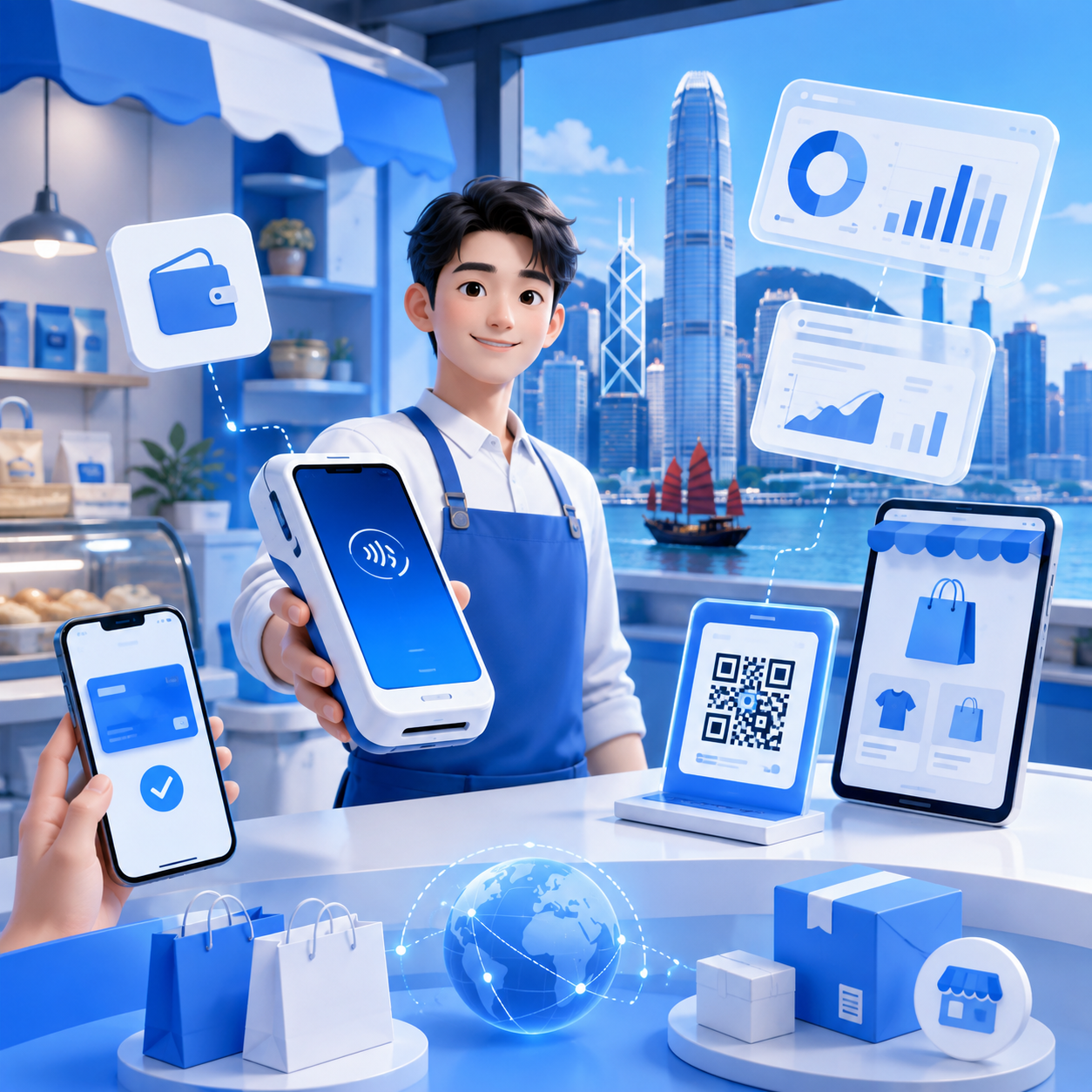
Snack shops thrive on high volume and low margins, so during peak hours, payment delays can lead to lost customers. Wonder's Mobile Payment Terminal (Wonder Terminal) supports contactless credit cards, Octopus, and QR Code payments, enabling lightning-fast checkout processes and reducing queue times.
Furthermore, with tourists returning, snack shops often serve mainland Chinese or overseas visitors. Wonder's Payment App (Wonder App) supports multi-currency payments, allowing tourists to pay in their familiar currencies or payment methods (Alipay, WeChat Pay, JCB, etc.). This not only enhances customer experience but also saves owners the hassle of foreign currency conversion, as all transactions can be managed centrally through the Wonder Dashboard.
Leverage government subsidies to ease financial pressure
The government has launched several SME funding schemes. Under the current arrangements for the "SME Export Marketing Fund (EMF)," applications are accepted for eligible promotional activities completed on or before June 30, 2026 (subject to the latest official announcements). Utilizing these resources can effectively reduce the financial pressure during the initial startup phase.
You may also like