
【Must-Read for Businesses】2025 Credit Card Terminal Fees: Which One is the Cheapest?
For businesses, accepting payments is paramount! The credit card terminals and POS systems you use directly impact daily operational efficiency and costs. But the market is flooded with a dizzying array of POS payment solutions: traditional, mobile, electronic, and even Soft POS that runs on your phone. Which one offers the best value? This article will use the latest 2025 information to analyze the most cost-effective credit card terminals, more efficient POS payment solutions, and practical strategies for cost control.
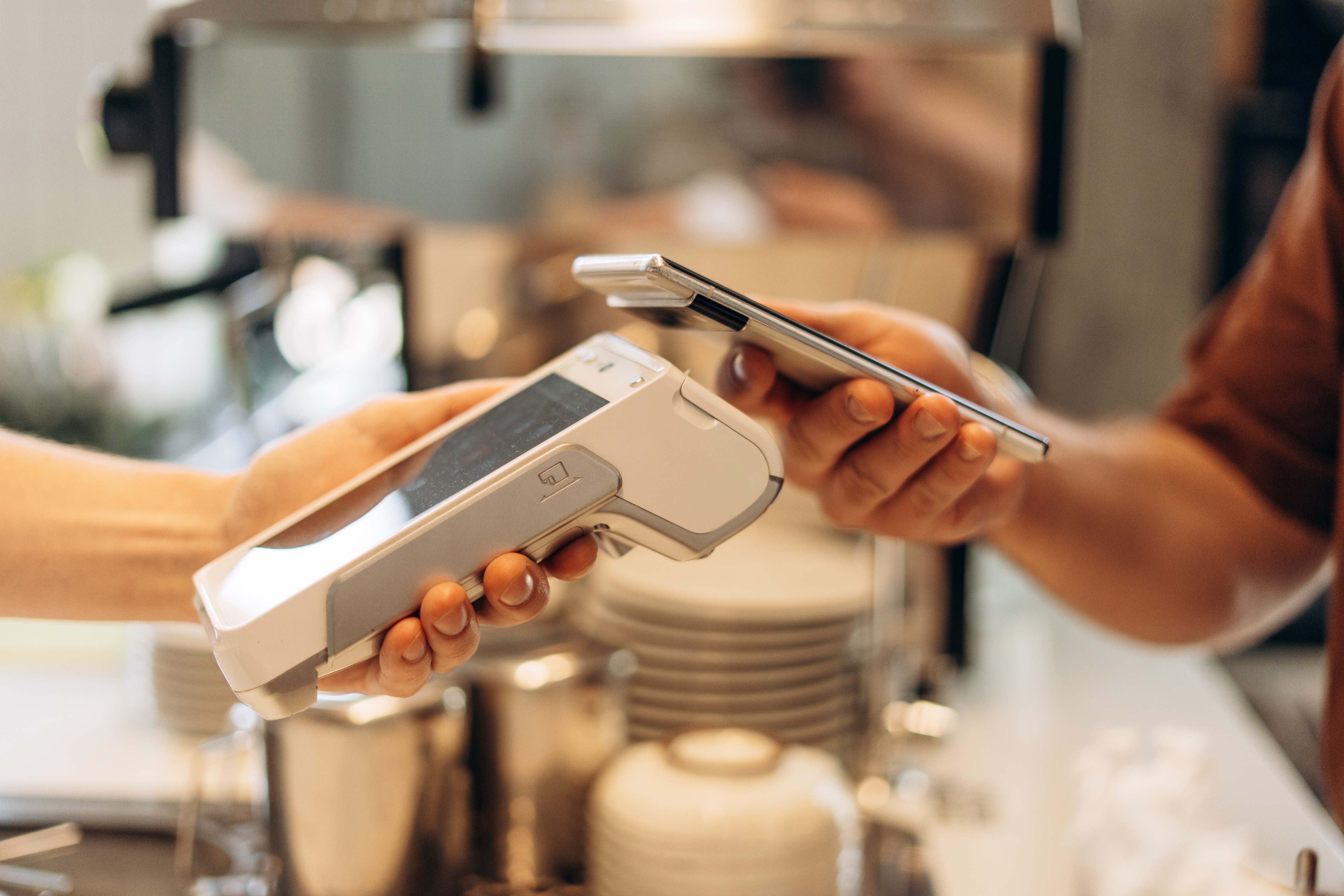
For businesses, accepting payments is paramount! The credit card terminals and POS systems you use directly impact daily operational efficiency and costs. But the market is flooded with a dizzying array of POS payment solutions: traditional, mobile, electronic, and even Soft POS that runs on your phone. Which one offers the best value? This article will use the latest 2025 information to analyze the most cost-effective credit card terminals, more efficient POS payment solutions, and practical strategies for cost control.
Top 4 POS and Credit Card Payment Solutions
Whether you're just starting out or upgrading your business, the most common POS and credit card payment solutions for merchants fall into these 4 types:
Traditional POS Systems
Traditional POS systems typically connect via phone lines or Ethernet (LAN), offering high stability but lacking flexibility. They support swipe, chip, and NFC payments, but cannot process QR code payments like Alipay HK, WeChat Pay, or Octopus. Additionally, daily manual closing procedures are cumbersome. Ideal for traditional retail stores with stable transaction volumes and single payment methods.
- Pros: Easy to operate, secure and stable payment process, supports various cards (Visa, Mastercard, UnionPay, etc.)
- Cons: High installation costs, requires monthly fees, outdated interface, no real-time reporting. Lacks intelligent management and diverse payment support, making it difficult to meet the demands of modern retail and the mobile economy.
Mobile Credit Card Terminals
Mobile POS terminals have built-in SIM cards or support Wi-Fi and Bluetooth. Their lightweight design allows for payments anytime, anywhere, making them ideal for businesses without a fixed location, such as market stalls, exhibition booths, or takeout pickup points. These devices support over 10 payment methods, including Visa, Mastercard, UnionPay, Apple Pay, Octopus, Alipay HK, and WeChat Pay, enhancing customer convenience.
- Pros: Supports various credit cards and e-wallet payments, compact and portable, supports electronic signatures
- Cons: Limited battery life, reliant on mobile signal, some models have longer settlement times
Electronic Payment Terminals
Beyond traditional credit card functions, electronic payment terminals integrate diverse payment methods like QR codes and e-wallets. They also support modules for member management, inventory tracking, loyalty systems, and food delivery platform integration, forming an all-in-one operational hub. Ideal for retail or large brand merchants seeking automation, or industries like F&B, beauty, and retail that value data analytics and customer experience.
- Pros: All-in-one device, supports various payment methods (credit cards, Octopus, PayMe, AlipayHK, etc.)
- Cons: Higher equipment cost, requires regular maintenance updates
Soft POS
Soft POS eliminates the need for traditional payment terminals. All you need is an NFC-enabled Android phone and a specific app to accept 'tap' payments directly on your phone or tablet. While it saves on equipment costs, it currently only supports certain card schemes and requires high network stability. It's more suitable for startups, freelancers, or temporary events.
- Pros: No hardware needed, quick setup, transparent fees
- Cons: Currently only supports NFC payments, some phone models are incompatible.
7 Tips to Choose the Right POS System, Boost Efficiency and Save Costs
1. Define your business needs and scale.
Businesses of different sizes and types have varying needs for POS and credit card terminal functions. Small businesses benefit from simple, affordable POS systems. Medium to large enterprises require advanced features like multi-store management, inventory, and data analytics. Industries like retail, F&B, or services can choose features supporting reservations, promotions, or member management based on their specific needs.
2. Budget and cost considerations.
When selecting a POS system, besides hardware and installation costs, pay attention to credit card terminal fee comparisons, including merchant discount rates (MDR), monthly fees, and rental fees. It's advisable to carefully review the fee details to avoid hidden costs.
3. Support for diverse payment methods and system compatibility.
Modern POS systems should support multiple electronic payment methods such as credit cards, Octopus, Apple Pay, Alipay, WeChat Pay, and PayMe, and have the capability to integrate with online stores, accounting, or inventory systems for future business expansion.
4. Security certification and technical support.
Choose a POS or credit card terminal certified with PCI DSS and other security standards to ensure transaction security. Additionally, the vendor should provide reliable technical support, operational training, and regular system updates.
5. Scalability and upgrade options.
As businesses grow, their POS system needs may change. Choosing a scalable POS system allows for easy future upgrades, such as adding new branches, integrating online sales channels, or loyalty point systems, simply through software updates or module expansion, without needing to replace the entire system, saving time and costs.
6. User experience and reviews.
Before purchasing, businesses are advised to check market user reviews, brand reputation, and personally try out the POS system to ensure the interface is simple and intuitive, and staff can easily get started, further improving overall operational efficiency.
7. Settlement period and cash flow management.
Different POS solutions have varying settlement periods (e.g., T+1, T+7) that impact cash flow. T+1 means funds are deposited 1 day after the transaction, while T+7 means a 7-day wait. Shorter settlement periods mean faster cash flow, so it's recommended to prioritize solutions with shorter settlement times to improve financial flexibility.
What are the costs of using a POS system? A clear overview to avoid hidden costs.
When choosing a POS or credit card terminal, merchants must carefully understand the overall fee structure to avoid exceeding their budget due to hidden costs. Currently, POS system fees in the market primarily include the following categories:
1. Equipment and hardware costs
- Purchasing equipment: One-time payment, prices generally range from HKD 3,000 to HKD 10,000, depending on features and models. For traditional POS systems, terminals, receipt printers, barcode scanners, and other hardware can amount to HKD 5,000 to HKD 20,000 or more.
- Equipment rental: Some suppliers offer rental services, with monthly fees around HKD 200 to HKD 500.
2. Software and system fees
- Software license fees: Traditional POS software usually requires a one-time purchase, costing approximately HKD 10,000 to HKD 50,000, depending on features and vendor.
- Cloud POS software: Often uses monthly or annual fees, with about HKD 100 to HKD 500 per terminal per month. Annual payments may receive discounts and include basic technical support and automatic updates.
- Software upgrade/update fees: Some traditional systems require additional payment for upgrades or updates.
3. Transaction fees
- Per-transaction fee: Charged as a percentage of the transaction amount, commonly between 1.8% and 3%. Different credit card terminal fees and vendor solutions vary, and merchant category and payment method also affect the final rate.
4. Installation, training, and maintenance
- Installation and training fees: Professional installation services typically cost between HKD 1,300 and HKD 4,000; staff training costs around HKD 700 to HKD 4,000. Some cloud POS solutions include installation and training in the subscription fee.
- Maintenance and technical support fees: Traditional POS systems have annual maintenance fees of approximately HKD 2,000 to HKD 5,000. Cloud POS usually includes these in the monthly or annual fee, offering 24/7 technical support and automatic software updates.
5. Other potential fees
- Cloud backup and third-party system integration: For advanced data backup or integration with accounting, inventory, and other third-party systems, some services may charge additional fees.
- Cash drawers and other accessories: Cash drawers, extra scanners, and other hardware accessories generally need to be purchased separately.
2025 POS Credit Card Terminal Fees & Features Comparison to Help You Find a Cost-Effective Solution
Below, categorized by type, is a summary of the functional and cost differences among various POS payment terminals:
| Type | Key Features | Equipment Cost | Monthly Fee Range | Transaction Fee | Stripe/Shopify and other third-party platform integration fees | Suitable for merchant types/target audience |
|---|---|---|---|---|---|---|
| Traditional POS Systems | Swipe, chip, contactless credit card, debit card payments | HK$1,000-10,000 | HK$100-400 | 1.5%-2.5% | Up to approx. 5% | Fixed stores, retail, chains, large shops |
| Mobile Credit Card Terminals | Mobile/tablet connected payment device, multiple payment methods (credit cards, NFC, QR Code) | HK$300-3,000 | HK$100-400 | 1.8%-2.5% | Approx. 3% – 5% | Mobile merchants, taxis, delivery, small service businesses |
| Electronic Payment Terminals | Multi-payment integration, cloud reports, CRM, automated data analytics | HK$3,000-15,000 | HK$200-600 | 1.5%-3% | Approx. 3% – 5% (incl. API/Plug-in costs) | F&B, retail, large/chain merchants |
| Soft POS | App installed on phone/tablet, no dedicated hardware needed, contactless card and QR code payments | Near zero cost (use your own device) | HK$100-500 (some free versions) | 1.3%-3% | Approx. 3% – 5% (depends on website platform solution) | Entrepreneurs, micro-merchants, market stallholders |
Information is for reference only; actual fees may vary based on supplier, industry, transaction volume, etc. It is recommended to inquire with the supplier for the latest plans and details before signing a contract.
Wonder Terminal: Instant Settlement Smart POS Payment Terminal
Want fast payments, clear data, and lower fees? Wonder Terminal is designed specifically for Hong Kong merchants, integrating bank-grade security, over 34 payment methods, instant settlement, void/refund capabilities, automatic reconciliation, and cloud management. From payment collection and payouts to data analysis, it's a one-stop solution. Apply in just 7 minutes, supports mobile network activation on the spot, ideal for businesses needing rapid setup across various industries. It also seamlessly connects with Wonder App and Wonder Dashboard, helping merchants manage all transaction data anytime, anywhere.
Key Features:
- • Instant settlement, fast fund transfers, stable cash flow
- • Comprehensive payment support, including credit cards, Apple Pay, Google Pay, Alipay, WeChat Pay, etc.
- • Integrates with Wonder App for instant revenue and billing analysis, full operational overview
- • Modern design, lightweight, suitable for various store applications
Want to learn more? Visit the Wonder Terminal official page now for the latest offers.
POS System Payment FAQs
How to apply for a POS payment terminal?
The application process for a POS payment terminal is quite simple. Registered Hong Kong businesses only need to submit their Business Registration Certificate (BR), bank account statements, and identification documents for company shareholders or owners to apply to a supplier.
Currently, while there are many electronic payment solutions in the market, merchants do not need to apply to each payment service provider individually. By choosing a one-stop POS payment terminal service provider (such as KPay), they can simultaneously enable up to 15 payment tools, including Visa, Mastercard, UnionPay, Alipay, WeChat Pay, BoC Pay, and Octopus, and support mobile payment methods like Apple Pay, Google Pay, and Samsung Pay, greatly simplifying the application process and contract management.
Which type of POS payment terminal is suitable for the F&B industry?
For the F&B industry, an integrated POS solution that supports multi-functions like "order management, split billing, member CRM, and food delivery integration" is recommended. Wonder Terminal can instantly process various payment types and automate account entries, significantly improving customer experience and management efficiency.
What hardware is required for a POS payment terminal to function properly?
Key components include the POS main unit, receipt printer, NFC reader, network connection device (WiFi/4G), and charger. Depending on actual operational needs, additional devices such as barcode scanners or customer display screens can be added to further enhance payment efficiency.
What accounting or inventory management systems can a POS payment terminal connect to?
Modern POS systems often support synchronization with accounting software and inventory systems. Wonder App can even automatically analyze revenue sources, track daily cash flow, generate tax reports, and manage bills, truly making it a one-app solution for all payment management needs.
You may also like